ZazaPay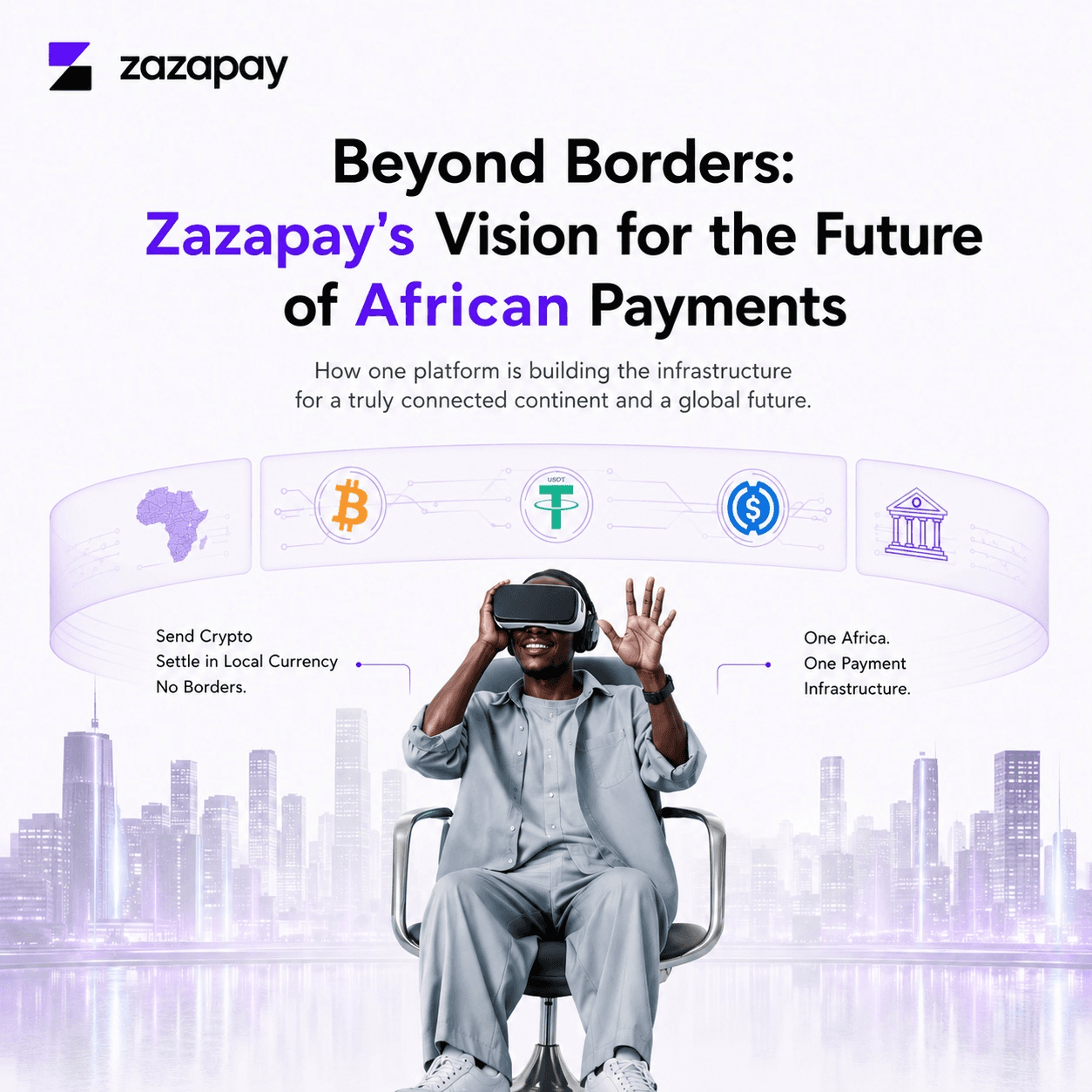
Beyond Borders: ZazaPay's Vision for the Future of African Payments
How one platform is building the infrastructure for a truly connected continent and a global future
Something is changing in how Africa moves money. Not slowly and not quietly. The demand for faster, simpler, and more reliable cross-border payments has been building for years, and the platforms that answer that demand are growing with it.
ZazaPay started with a clear and specific problem: cross-border payments in Africa were too slow, too expensive, and too difficult to track. The solution was equally clear. Build a platform that connects digital assets to the payout methods people already use and trust, and make the entire experience simple enough for anyone to use regardless of their technical background.
Today ZazaPay operates across ten African countries: Cameroon, Ivory Coast, Ghana, Gambia, Kenya, Nigeria, Rwanda, Sierra Leone, Senegal, and Uganda. But that is not where the story ends. It is where it starts.
A Continent Still Finding Its Payment Infrastructure
Africa is home to 54 countries, hundreds of currencies, and some of the most fragmented financial infrastructure in the world. Sending money between two African countries can cost more and take longer than sending money between Africa and Europe. That is not a small inconvenience. It is a structural barrier that limits trade, slows business growth, and makes everyday life harder for millions of people.
The numbers tell the story clearly. Africa has the highest cost of sending remittances of any region in the world. Intra-African trade, despite the continent's enormous potential, remains limited in part because moving value across borders is still unnecessarily complicated. Businesses that want to operate across multiple African markets face payment friction at every step.
This is the environment ZazaPay was built to change. Not just in the countries it operates in today, but across the continent and eventually beyond it.
The Vision: Simple Payments, Anywhere
ZazaPay's mission has always been straightforward: make cross-border payments faster, clearer, and more usable by connecting digital assets to the payout methods people already trust. That mission does not stop at any particular border.
The vision is to make sending value across borders as simple as making a local transfer, regardless of the payment rail behind it. In practical terms, that means a business owner in Cameroon should be able to pay a supplier in Kenya just as easily as paying someone down the street. A freelancer in Nigeria should be able to receive payment from a client in London without navigating three different platforms and waiting five business days.
ZazaPay is building toward that reality. The expansion that is coming is not just about adding more countries to a list. It is about closing the gaps in a payment network that Africa has needed for a long time.
Growing Across Africa
The ten countries ZazaPay currently serves represent a strong and deliberate foundation. They cover West Africa, East Africa, and Central Africa, giving the platform a broad footprint across the continent's most active economic corridors.
But Africa has 54 countries and the demand for better cross-border payment infrastructure exists across all of them. ZazaPay's expansion across Africa is an ongoing commitment, not a finished project. As new markets become ready and the right local payout partnerships are in place, the platform grows.
What makes this expansion meaningful is how it is being done. ZazaPay does not just enter a new market and offer a generic service. The platform connects to the local payout rails that people in that country already use, whether that is a specific mobile money provider, a local bank network, or another familiar channel. That local focus is what makes the experience feel simple and trustworthy rather than foreign and complicated.
Looking Beyond Africa
The problem ZazaPay is solving is not uniquely African. Anywhere in the world where people need to send value across borders and face friction, high fees, or lack of transparency, the same solution applies.
ZazaPay's vision extends beyond the African continent. The same infrastructure that makes it simple to send Bitcoin from Nigeria to Ghana and have it arrive as local currency can work across any border where there is demand and the right local payout infrastructure to connect to.
This is a significant part of what makes ZazaPay's model compelling. It is not built around one region or one corridor. It is built around a principle: that moving value across borders should be as simple, clear, and accessible as possible for anyone, anywhere. That principle scales.
As ZazaPay continues to grow, the global opportunity comes into focus. African diaspora communities around the world sending money home. International businesses paying African contractors and suppliers. Cross-border trade between Africa and other emerging markets. All of these use cases become easier as the ZazaPay network expands.
What This Means for Users and Businesses
For anyone already using ZazaPay, the expansion means more corridors, more payout options, and more flexibility in how you move money. The people you need to pay and the clients who need to pay you will increasingly be reachable through the same platform you already trust.
For businesses operating across borders, it means less time managing multiple payment platforms for different markets and more time focused on actual business. One platform, one experience, and a growing network of countries and payout rails behind it.
For first-time users who have been hesitant to try a digital payment platform, the expansion brings ZazaPay closer to wherever you are, with the same simple experience and the same commitment to transparency that has defined the platform from the start.
Built for Where Africa Is Going
Africa's economy is young, growing, and increasingly digital. A new generation of entrepreneurs, freelancers, and business owners is building across borders in ways that were not possible a decade ago. The payment infrastructure needs to keep up.
ZazaPay is one of the platforms building that infrastructure. Not by trying to replace what already works locally, but by connecting the dots between digital assets and local payout methods in a way that feels familiar, fast, and trustworthy.
The expansion is coming. More countries, more corridors, and eventually more continents. The vision is clear even when the specific next step is still being decided.
Make cross-border payments simple for everyone, everywhere. That is a goal worth building toward.
ZazaPay is currently available in Cameroon, Ivory Coast, Ghana, Gambia, Kenya, Nigeria, Rwanda, Sierra Leone, Senegal, and Uganda. Expansion across Africa and beyond is ongoing.